Interest in the relationship between neuroscience and early year education has grown significantly in recent years. For a long time, early education focused mainly on the transmission of basic knowledge. However, scientific advances have shown that the first years of life are a crucial stage for brain development. Thanks to research into how the human mind works, we now have a better understanding of how children learn, what stimulates their curiosity and which factors encourage deeper and more meaningful learning.
From this connection between science and education emerges neuroeducation, an approach that applies discoveries from neuroscience to the educational field. Its goal is to understand how the brain functions during the learning process and to use this knowledge to design more effective educational experiences that respect each child’s natural pace of development.
During the early year education, which roughly covers ages 0 to 5, the brain is going through one of its most important periods of growth and plasticity. This means that neural connections are formed extremely quickly, and the experiences children have during these years can have a profound impact on their cognitive, emotional and social development.
How is neuroscience applied in Early Year Education?
According to research from the Center on the Developing Child at Harvard University, during the first years of life the brain can form more than one million new neural connections every second. This explains the enormous importance of early experiences in learning and development.
For this reason, the educational environment at this stage must provide appropriate stimulation, meaningful experiences and opportunities for active learning. The goal is not simply to teach content, but to create an environment that awakens the child’s natural curiosity and supports their overall development.
The brain learns more effectively when elements such as emotion, movement, surprise and active participation are involved. When a child feels motivated and enjoys what they are doing, the brain releases neurotransmitters that support attention, memory and learning consolidation.
On the other hand, a rigid or poorly stimulating environment can limit a child’s ability to fully develop their potential.
How do children learn according to neuroscience?
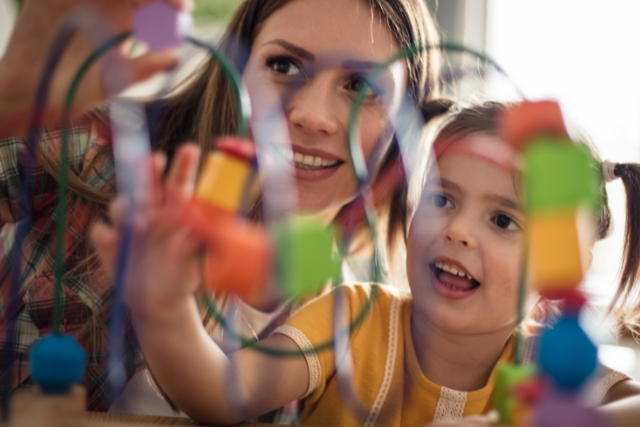
One of the most important principles of neuroeducation is that children learn by doing. Learning through experience, manipulating objects and exploring the environment allows the brain to process information in a deeper and more meaningful way.
Play is a fundamental tool in this process. Through play, children naturally develop cognitive, social and emotional skills. At the same time, play encourages creativity, imagination and problem-solving abilities.
Activities that combine movement, experimentation and active participation also help strengthen learning. When children use different senses to learn—seeing, touching, listening or moving—multiple areas of the brain are activated, leading to a more complete understanding of what they are discovering.
This educational approach also pays special attention to the role of emotions in learning. Emotions have a direct influence on motivation and memory. When children feel safe, supported and valued, their brains are far more prepared to learn.
The role of the learning environment in brain development
Another key aspect of neuroeducation is the design of the learning environment. The space in which children learn can become a powerful educational tool in itself.
Open classrooms, exploration areas, hands-on materials and spaces designed for different types of activity help create an environment that stimulates curiosity and discovery. Every element of the environment can become an opportunity for learning.
These types of spaces support the development of essential skills such as autonomy, creativity, communication and cooperation. At the same time, they allow each child to explore at their own pace and discover the world around them in a natural way.
Interaction with other children and teachers is also essential for social and emotional development. Learning at this stage is not only an individual process; it is also built through relationships, collaboration and shared experiences.
Neuroscience and Early Year Education in British Schools
At the British Schools of Alzira, Xàtiva and Gandía, we have incorporated an educational approach in early childhood based on the principles of neuroscience applied to learning.
After years of research and development, we have created a project specifically designed for early childhood education, aimed at stimulating learning while respecting the way the brain develops during the first years of life.
This philosophy is also reflected in the learning environments created for this stage, where every space has been carefully designed to encourage exploration, experimentation and emotional engagement as key drivers of learning. Children learn through practical experiences that spark curiosity and inspire them to discover the world around them.
In addition, this entire process takes place within a full English language immersion environment, allowing children to become familiar with the language naturally from an early age.
Thanks to this approach, the British Schools of Alzira, Xàtiva and Gandía have become pioneers in applying neuroscience to early childhood education in Spain, embracing a model that places the child at the centre of the learning process and aims to develop their abilities to the fullest from the very first years.